The VRM, or vehicle number plate, and the approximate mileage of the car or motorcycle you want to check are all you need. The vehicle must be registered in the UK, however private plates will also work.
Check any car in the UK instantly to find if a vehicle has been declared as an accident write-off.Identify if the car owner uses its insurance coverage for compensating the vehicle damage or repairs through the write-off categories. The premium vehicle check report provides a detailed total car check report( than the free one) if your chosen vehicle has been in any accident, damage, or write off as per insurance records.
As the market turns upside down, used cars cost more than the new cars in the marketplace. It’s quite obvious where insurance premiums for a used car might cost higher due to the demand for “new cars”. This guide is for buyers looking for the accident traces on the used car & tips for “how-to” to identify if a car has been in an accident.
Does car check reveal the car “If it has been in an accident”?
It is still quite hard for the buyers to identify the signs of damage on the vehicles at the showroom. It is obvious to search whether the chosen vehicle VRM has any hidden issues or not, until the seller reveals it.
Most of the searches are: Will the vehicle history report reveal data of the accident vehicle?It is possible when the owner/seller reported the incident to the insurer and proof of assessing the damaged vehicle under the “write-off categories”. Know how to check on which category the vehicle has.
Many drivers don’t want to lose their no-claim bonus (NCB), and it has also not been recorded with MIAFTR, which means you can’t find the write-off category through service providers online.
Unfortunately, it is difficult to determine with full certainty whether a car has ever been in an accident. Many drivers fail to declare it to their vehicle insurance providers.
Recommended reading: Pros and Cons of buying insurance write off car
Manual inspections: Does it help to spot the accident marks?
Check the essential things for determining if the car you are interested in has ever been in an accident history.
-
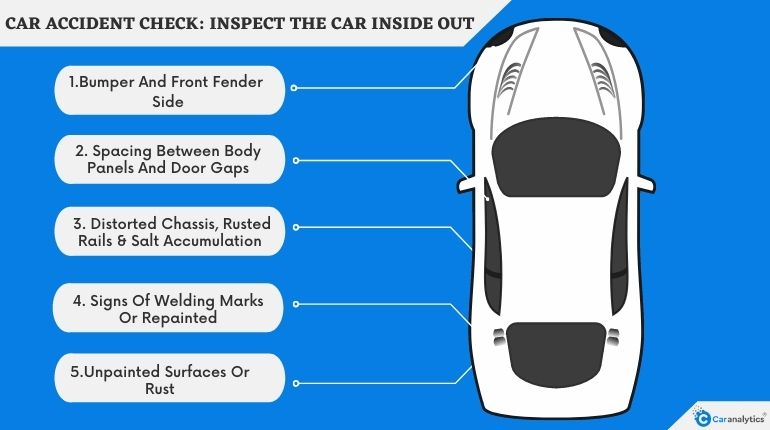
Inspect the cracks on the bumper & the front fender’s side.
- Check the spacing between body panels and door gaps. Ensure they fit together, as uneven gaps are indications of accidental damage.
- Evaluate if the mainline down the side of the car is straight. Uneven lines and out of shape reflections indicate that the car is being hammered or parts have been replaced.
- Examine gaps in body panels, around windows, and inside the doors to see if the car has been repainted.
- Carefully look along the car’s underbody for signs of damage like distorted chassis, rusted rails, and salt accumulation.
- Run a thorough check to ensure that there are no signs of welding.

What to do if the dealer/ seller fails to declare about the “accident”?
There are chances where the dealer may or may not disclose that the vehicle has been in an accident. It is an offence if the dealer knows the accident history but fails to inform the buyer. Suppose the dealer is unaware of the accident history, then it will be hard to claim against them.
It’s better to know who owns the vehicle before to avoid the scammed vehicle.
What if the accident history isn’t shown in the MIAFTR database?
There are certain reasons where the database isn’t showing properly. Using “0” zero instead of “o” in your registration number can be an error. Typo errors happen!
The second possibility is that you will shift to a new UK private number plate. It takes time to reflect on the database.
If not, some owners failed to report to the insurance company considering its minor damage; such vehicles are said to be “category U” which means unrecorded write-off vehicles. Therefore, it also is tough to identify such vehicles using the car check service providers as it doesn’t flag up as a write-off issue.
Buyers beware:
It is okay to buy a write-off when pre-planned your budget. However, you should know the buyer’s legal rights on purchasing a second-hand car as a buyer.
Also read: Used car buying guides
It is unfortunate that you mistakenly landed up in the financed or stolen vehicle with an accident history. There are scenarios where buyers end up in such a vehicle that results in a loss.
Proceed here if you want to pay the lowest price online for a comprehensive car data check that is backed by a £30,000 data guarantee.
Pay once you know the full car history. Shop safe!